

Curious about lemon laws? Read our Lemon Law FAQ page
Why Do Hyundai IONIQ 5 Vehicles Lose Power? What I Found After Reviewing Hundreds of ICCU Complaints (2022–2025)
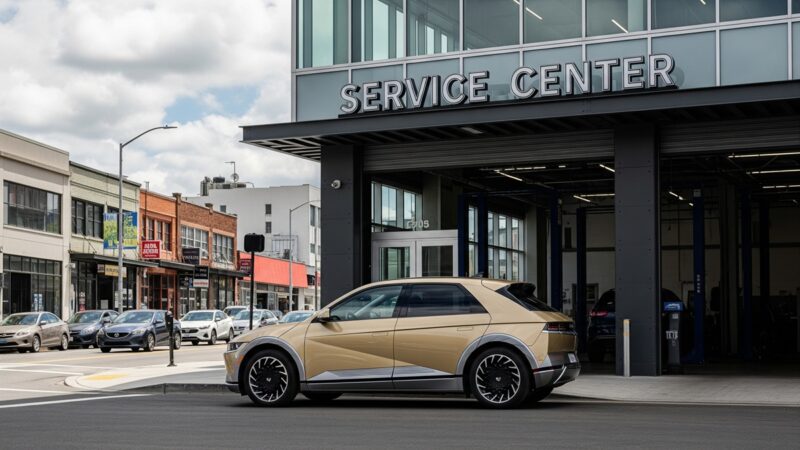
I began looking into Hyundai IONIQ 5 power failures after a client contacted me about a sudden electrical shutdown in a relatively new vehicle. The description sounded familiar, and I realized it was the same ICCU-related failure that has been affecting IONIQ 5 and EV6 owners since 2022.
My name is Sergei Lemberg. I have spent more than twenty years representing consumers in lemon law and vehicle defect cases. When the same technical issue continues appearing year after year, it is rarely coincidence.
That client call led me back into owner complaints, recall records, and safety filings tied to Hyundai’s electric charging and power control system. This article summarizes what I found.
The Pattern That Kept Showing Up
Across 2022 through 2025 Hyundai IONIQ 5 vehicles, owners have been reporting failures tied to the Integrated Charging Control Unit — commonly referred to as the ICCU. The Kia EV6 using the same system and you can read about the 2022 Kia EV6 ICCU failure here.
The ICCU is not a small accessory. It manages charging of the 12-volt system and supports low-voltage vehicle electronics. When it fails, the vehicle’s ability to operate safely can degrade quickly.
Hyundai itself has described how ICCU failures can lead to progressive power loss and, eventually, a complete loss of motive power
What’s the Problem with the IONIQ 5 ICCU?
There is a major problem with the 2022 Hyundai IONIQ 5 that it shares with the 2022 Kia EV6 that is built on the same E-GMP, its first dedicated BEV (Battery Electric Vehicle) platform. Even though Kia operates independently, it is owned by Hyundai Motor Group, and the Kia EV6 and Hyundai IONIQ 5 have the same Hyundai Integrated Charging Control Unit (ICCU). So, it stands to reason that because there is a problem with the ICCU, both vehicles are affected. We know this to be true, because owners of both vehicles are reporting bad experiences with the ICCU.
While many dealers appear to have no idea what the problem is, some have identified that the ICCU is the problem with the IONIQ 5. But the required ICCU replacement and parts aren’t readily available and have to be ordered from South Korea.
The result is that complaints are rampant. Those filed with the National Highway Traffic Safety Administration (NHTSA) are all relatively recent, dating from March 1, 2023. Comments about the issue on the IONIQ Forum and on Reddit started at a similar time.
What Problems are Owners Experiencing?
Here are a few examples of how drivers have described these failures:
“Car failed while I was parked in the SFO airport cell phone lot. It was night and very cold. There was no warning of a problem. Car had to be towed to Hyundai of San Bruno. It is still there. DTC: P1A9096. Hyundai dealer confirmed ICCU failure. Not repaired in a timely manner to non availability of part.”
“Electrical failure while on the highway. Later diagnosed as failed ICCU issue that also destroyed the 12V battery. Very scary during rush hours traffic with passengers.”
“High voltage battery failure indicated by “check electrical system” error code and P1AD300 diagnostic code.”
“Heard a pop and received warnings of electrical failure. Car could only accelerate to 10 mph and battery eventually died. Towed it to the dealer and they confirmed that the ICCU failed and needed replacement.”
What Dashboard Codes Are Related to the ICCU Failure
When I reviewed the owner complaint data, I noticed that the same diagnostic fault code appeared far more often than any other. I have included other codes here as well. While each has not been officially labeled as an ICCU defect, they repeatedly appeared in complaints where the ICCU was identified as the failure point or where the symptoms closely matched known ICCU failure behavior.
Here are the ICCU-related or power-system fault codes most frequently reported:
- P1A9096 – Appears most often. Commonly associated with ICCU or power conversion failure leading to loss of charging and drivability.
- P1AA700 / P0AA700 – High-voltage battery system isolation or voltage fault. Often triggers system shutdown to prevent electrical damage or shock risk.
- P1AD300 – High-voltage battery or charging system failure tied to power management.
- P0B6D00 – Battery management system fault affecting charging capability.
- P1B9700 – Power control or charging circuit malfunction.
- P056216 – Voltage regulation failure affecting low-voltage stability.
- P0A9B11 – Charging control system fault.
Federal Investigation
In June 2023, NHTSA’s Office of Defects Investigation opened a formal investigation into ICCU failures in certain 2022 Hyundai IONIQ 5 vehicles after receiving dozens of owner complaints.
At the time, ODI had already collected 42 separate reports from owners describing a similar sequence: a loud pop, followed by reduced or complete loss of motive power. Many drivers also reported warning messages telling them to check the vehicle’s electrical system or power supply.
Investigators identified a clear correlation between these power loss events and failures of the vehicle’s Integrated Charging Control Unit. The investigation focused not only on the ICCU itself, but also on related charging and low-voltage conversion components tied to the high-voltage battery system.
ICCU Issue Recall
Next up, I reviewed Hyundai’s recall filings. Hyundai has issued multiple recall campaigns acknowledging that the ICCU can fail and lead to loss of 12-volt charging and eventual loss of motive power.
Here is what those recalls show:
- ICCU internal components can fail due to electrical and thermal stress.
- ICCU failure can prevent the 12-volt battery from charging.
- Vehicles may enter warning stages and then lose motive power.
- Software updates and ICCU or fuse replacement are the primary remedies.
- Some vehicles continued to experience ICCU failures after prior recall repairs.
What Is Covered in the IONIQ 5 ICCU Recall?
This page covers the IONIQ 5, but I did want to include
Recall 24V-204 from March 15, 2024 covered approximately 98,878 vehicles, including:
- 2022–2024 Hyundai IONIQ 5
- 2023–2024 Hyundai IONIQ 6
- 2023–2024 Genesis GV60
- 2023–2024 Genesis GV70 Electrified
- 2023–2024 Genesis G80 Electrified
Recall 24V-868 from November 18, 2024 expanded coverage to approximately 145,235 vehicles, including:
- 2022–2024 Hyundai IONIQ 5
- 2023–2025 Hyundai IONIQ 6
- 2023–2025 Genesis GV60
- 2023–2025 Genesis GV70 Electrified
- 2023–2024 Genesis G80 Electrified
It’s important to note that the 2025 Hyundai IONIQ 5 is not included in any recalls as of the writing of this piece despite multiple ICCU related complaints.
What Can You Do?
If you own or lease a Hyundai IONIQ 5 affected by ICCU-related failures, there are practical steps you can take to protect yourself — even while the recall process continues.
- Check your VIN on NHTSA’s website to confirm whether your vehicle is included in either recall.
- Document warning message, including dashboard alerts and fault codes.
- Request written service records that clearly state the dealer’s diagnosis and any ICCU-related findings.
- Track the number of days your vehicle is out of service for repair.
- Keep receipts for towing, rental cars, charging issues, and related expenses.
- Do not ignore reduced-power behavior, even if the vehicle still moves. Limp mode is not normal operation.
If your vehicle has experienced repeated ICCU failures, extended downtime, or power loss while driving, those facts matter. Not emotionally — but legally and practically.
The more organized your records are, the clearer your options become.
Sources:
- 2022 NHTSA Complaints
- 2023 NHTSA Complaints
- 2024 NHTSA Complaints
- 2025 NHTSA Complaints
- ODI Investigation
- March 2024 Recall 24V-204
- November 2024 Recall 24V-868

About the Author:
Sergei Lemberg is an attorney focusing on consumer law, class actions related to automotive issues, and personal injury litigation. With nearly two decades of experience, his areas of practice include Lemon Law (vehicle defects), Debt Collection Harassment, TCPA (illegal robocalls and texts), Fair Credit Reporting Act, Overtime claims, Personal Injury cases, and Class Actions. He has consistently been recognized as the nation's "most active consumer attorney." In 2020, Mr. Lemberg represented Noah Duguid before the United States Supreme Court in the landmark case Duguid v. Facebook. He is also the author of "Defanging Debt Collectors," a guide that empowers consumers to fight back against debt collectors and prevail, as well as "Lemon Law 101: The Laws That Lemon Dealers Don't Want You to Know."
See more posts from Sergei Lemberg BE THE FIRST TO COMMENT