

Curious about lemon laws? Read our Lemon Law FAQ page
2026 Hyundai Palisade Power Seat Problems
Class Action Investigation
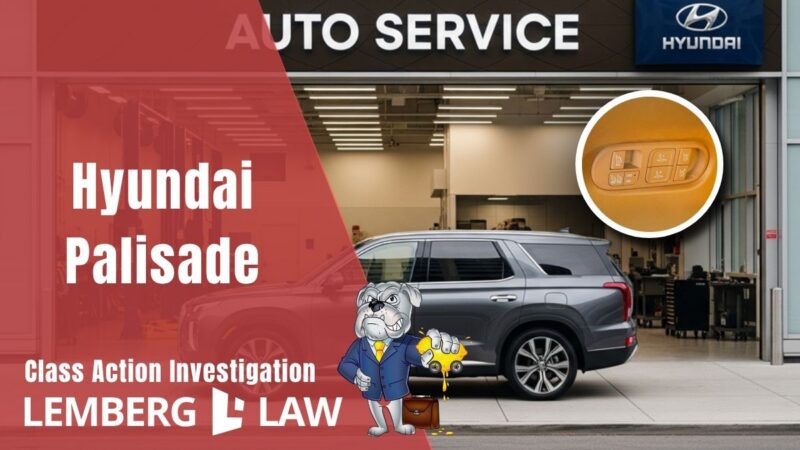
Lemberg Law is conducting a class action investigation into power seat safety defects in the 2026 Hyundai Palisade after multiple reports that the second-row “walk-in” and power seat functions can move without detecting occupants, creating a risk of pinning or crushing passengers.
Don’t be stuck with a lemon. You have legal rights to cash, return or buyback.
The law makes Hyundai pay legal fees.
We've fixed thousands of lemon problems. Message or call 844-928-4443 today.
What’s the Problem with 2026 Hyundai Palisade Power Seats?
The 2026 Hyundai Palisade includes powered second-row seats designed to slide, fold, and reposition automatically to allow access to the third row. These features are often activated by buttons on the seat itself or from the rear passenger area.
However, a growing number of owners report that the system may fail to detect when a person is in the seat’s path, allowing the seat to continue moving even when it is pressing against someone.
When this happens, occupants may be pinned between seats or between the seat and the vehicle interior. In some cases, users report being unable to immediately stop the motion.
Owners frequently describe issues such as:
- Power seats moving without detecting a passenger in the way
- “Walk-in” auto-cycle activating unexpectedly or accidentally
- Seats continuing to fold or slide despite resistance
- Passengers being pinned against front seats or interior panels
- Difficulty stopping the seat once movement begins
Because these seats move with motorized force, the absence of effective obstruction detection may create a serious safety risk, especially for children or rear-seat passengers.
What are Owners Experiencing?
Here are several representative complaint excerpts from 2026 Hyundai Palisade owners describing these power seat incidents:
“A passenger got into the passenger side middle row seat and the seat fold up button was accidentally bumped while the person was trying to get situated and buckled. The seat began moving and folding forward, pinning the passenger between the seat they were in and the back of the front seat. This incident hurt the passenger who had the force of the seat against her and it frightened her very badly.”
“My 9 year old daughter was sitting in middle row, as her sisters were getting in as well, the recliner button was pressed and she was being pinned against the front row seat. She wiggled her way out but suffers from Spina bifida and wears AFO braces for her feet. Her foot braces were caught and they snapped but luckily she was able to wiggle out.”
“Power folding seats do not stop when met with an obstruction. Occupant exiting the 3rd row of the vehicle was squished between the 2nd row seat and door frame of vehicle while trying to exit and it was very painful. When tested at the dealership, they confirmed that, even if excessive force is applied to the seat back while it’s folding or sliding, it will not stop folding or sliding, which could cause physical injury”
Recall for 2026 Palisade Power Seat Defect
Hyundai has issued a safety recall (NHTSA Recall No. 26V160) covering certain 2026 Palisade vehicles equipped with second- and third-row power seats.
According to Hyundai, the affected vehicles may have power seat systems that fail to properly detect contact with an occupant or object during operation, particularly when using:
- Automatic power-folding (stow) functions
- “One-touch” tilt-and-slide (walk-in) features
As a result, the seat may continue moving even when it is pressing against a person, increasing the risk of injury.
The recall affects more than 61,000 vehicles, and Hyundai has acknowledged that:
- The system’s current logic may not respond to contact as intended
- There has been at least one reported fatality potentially linked to the condition
- Multiple injury reports have also been received
Hyundai has stated that the issue stems from the seat control system’s logic and response to obstruction, which may not properly stop movement when resistance is encountered.
Remedy Status
- Hyundai is developing a software-based fix to improve the system’s response to occupants or objects
- Updates may be provided through dealer service or over-the-air (OTA) updates
- All repairs are expected to be free of charge
However, at the time the recall was initiated, a full remedy was not yet available, and dealers were instructed not to sell affected vehicles.
Hyundai has also advised owners to exercise caution when using power seat functions, particularly when children or passengers are nearby.
What Can You Do If Your Palisade Has This Issue?
If your Hyundai Palisade experiences unintended seat movement or fails to stop when obstructed, documenting the issue may help establish a pattern:
- Record when and how the seat moves unexpectedly
- Take photos or videos, when safe, showing the behavior
- Note whether the seat stops or fails to stop when obstructed
- Keep records of any injuries or damage caused
- Save dealership visit records and repair attempts
- Ask whether Hyundai has issued any updates or applied the recall remedy
Detailed documentation can be important if the issue continues despite attempted repairs.
Your Legal Rights
Depending on your state and the vehicle’s repair history, repeated power seat safety issues may involve:
- Warranty protections
- Lemon law rights
- State consumer protection statutes
- Potential class action litigation
Each case depends on the facts, including repair attempts, time out of service, and whether the condition affects vehicle safety.
Curious about recalls? Read our 2026 Hyundai Palisade Recalls page
Get a Free Case Evaluation
If your 2026 Hyundai Palisade has experienced power seat malfunctions, unintended seat movement, or incidents involving passengers being pinned or injured, you may want to learn about your legal options.
Lemberg Law is currently reviewing these complaints as part of an ongoing class action investigation and also evaluates individual cases where appropriate.
There is no cost to speak with us. We handle these matters on a contingency fee basis, meaning you do not pay legal fees unless there is a recovery.
Contact us today for a free case evaluation.
Sources:

About the Author:
Sergei Lemberg is an attorney focusing on consumer law, class actions related to automotive issues, and personal injury litigation. With nearly two decades of experience, his areas of practice include Lemon Law (vehicle defects), Debt Collection Harassment, TCPA (illegal robocalls and texts), Fair Credit Reporting Act, Overtime claims, Personal Injury cases, and Class Actions. He has consistently been recognized as the nation's "most active consumer attorney." In 2020, Mr. Lemberg represented Noah Duguid before the United States Supreme Court in the landmark case Duguid v. Facebook. He is also the author of "Defanging Debt Collectors," a guide that empowers consumers to fight back against debt collectors and prevail, as well as "Lemon Law 101: The Laws That Lemon Dealers Don't Want You to Know."
See more posts from Sergei Lemberg BE THE FIRST TO COMMENT